Designed for Everyone: Inside Tampere's Blueprint for Truly Inclusive Public Transit
For many Americans with disabilities, the daily act of commuting involves a series of calculations that most travelers never consider: Will the elevator be working? Is the ramp deployed in time? Will the driver acknowledge my stop request? These are not hypothetical concerns — they are routine friction points embedded into transit systems across the United States. In Tampere, Finland, however, that friction has been systematically engineered away. The result is a public transportation network that treats accessibility not as a compliance checkbox, but as a foundational design principle.
A Different Starting Point
The contrast between American and Finnish approaches to transit accessibility begins at the policy level. In the United States, the Americans with Disabilities Act of 1990 established baseline requirements for public transit — requirements that, while significant in their time, were written into a system already burdened by decades of inaccessible infrastructure. Retrofitting became the dominant approach.
Tampere took a different path. When the city undertook its ambitious tram network expansion — the modern Tampere Tramway opened in 2021 — accessibility was not a secondary consideration. It was a design requirement from the earliest planning stages. Every tram stop, every vehicle, and every digital interface was evaluated through the lens of universal usability before construction began. The difference in outcome is substantial.
Low-Floor Vehicles as the Default Standard
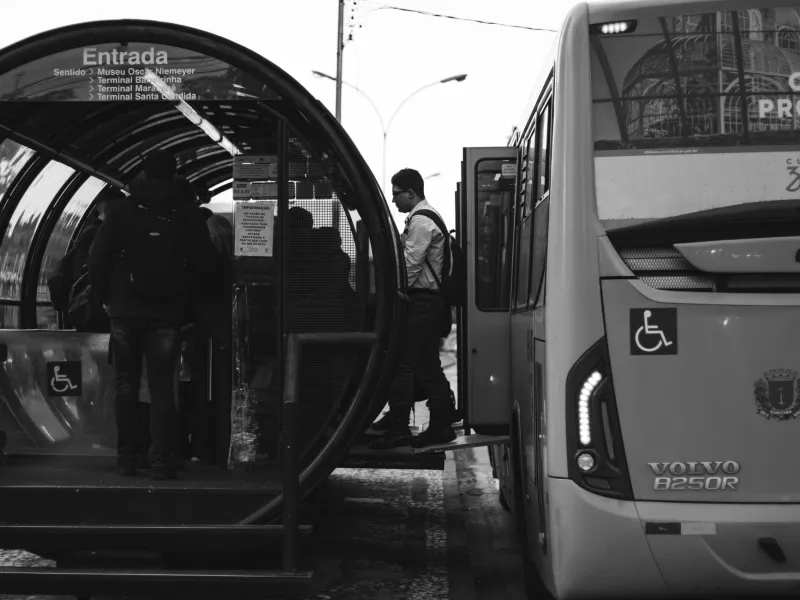
Perhaps the most immediately visible element of Tampere's accessible transit infrastructure is the universal adoption of low-floor vehicles across its tram and bus networks. Unlike older transit systems where passengers must navigate steps to board, Tampere's modern trams and the vast majority of its bus fleet feature floor-level boarding that aligns directly with raised platform stops.
For wheelchair users, parents with strollers, elderly passengers, and anyone managing luggage or mobility aids, this design eliminates the single most common boarding barrier in urban transit. There are no portable ramps to request in advance, no waiting for a driver to manually deploy equipment. The access is simply there, built into the vehicle's architecture.
This may sound straightforward, but it represents a significant departure from what many American transit riders experience. According to data compiled by the American Public Transportation Association, a meaningful percentage of U.S. bus and rail vehicles still require either manual ramp deployment or elevator access — systems that introduce both delay and the possibility of mechanical failure.
Real-Time Accessibility Information
Owning an accessible vehicle fleet is one thing. Ensuring that passengers can plan their journeys with confidence is another challenge entirely. Tampere addresses this through its digital transit tools, which integrate real-time accessibility status information directly into route planning.
The Nysse journey planner — the primary digital transit tool for the Tampere region — allows users to filter routes based on accessibility requirements. When a stop or vehicle has a reported accessibility issue, that information is surfaced in real time, giving passengers the opportunity to select an alternative before they are already standing on a platform. For American travelers accustomed to discovering accessibility problems only upon arrival, this proactive information architecture represents a meaningful quality-of-life improvement.
The system also feeds into third-party applications, meaning that accessibility data is not siloed within a single app but distributed across the broader digital ecosystem that transit users already rely upon.
Audio and Visual Announcements: A Dual-Channel Approach
Tampere's trams and buses provide both audio announcements and visual display systems for stop information. This dual-channel approach serves passengers with visual impairments, hearing impairments, and those who simply find themselves in a noisy or distracted environment.
Audio announcements are delivered clearly and consistently, with sufficient lead time for passengers to prepare to disembark. Visual displays, mounted at multiple points within each vehicle, show upcoming stops alongside route information. For visitors unfamiliar with Finnish geography — which will describe most American travelers on their first visit — this redundancy is particularly valuable. You need not rely solely on your own navigation skills; the vehicle itself guides you.
Staff Training and Passenger Assistance
Infrastructure alone does not create an inclusive transit experience. The human element matters considerably. Tampere Regional Transport, which oversees the Nysse network, maintains training programs for transit operators that emphasize passenger assistance and awareness of diverse mobility needs.
Drivers are trained to allow adequate boarding time for passengers who require it, to confirm stop requests for passengers with visual impairments, and to communicate clearly with individuals who may have cognitive or communication differences. While no system is perfect, the cultural orientation within Finnish public services toward patience and attentiveness creates an environment that many travelers with disabilities describe as notably less stressful than comparable experiences in American cities.
Tactile Guidance at Stops and Stations
At major tram stops and transit hubs throughout Tampere, tactile paving systems guide visually impaired passengers from street level to boarding areas. These textured surface indicators — standardized across the network — communicate directional information through the soles of a passenger's feet, a globally recognized wayfinding tool that Tampere has implemented with consistency rather than as an occasional feature.
For American visitors who use white canes or guide dogs, these tactile pathways provide immediate orientation in an unfamiliar environment. Combined with the audio announcement systems aboard vehicles, they create a navigable transit experience that does not require prior local knowledge.
What Transit Advocates in the U.S. Can Take Away
Tampere's accessible transit model is not the product of unlimited resources or unique geographic advantage. It is the result of deliberate policy choices, sustained investment, and a planning culture that treats universal access as non-negotiable rather than aspirational. Several of its core principles are directly transferable to the American context.
First, the integration of accessibility requirements into new infrastructure projects from the design phase — rather than as an afterthought — dramatically reduces long-term costs and operational complications. Second, real-time digital accessibility information empowers passengers to make informed decisions and reduces the anxiety associated with unpredictable access conditions. Third, consistent staff training and a service culture that values patience and attentiveness amplifies the impact of physical infrastructure improvements.
For transit agencies in cities like Indianapolis, Columbus, or Salt Lake City — all of which are actively expanding or modernizing their transit networks — Tampere offers a concrete, functioning reference point rather than an abstract ideal.
Planning Your Visit With Accessibility in Mind
For American travelers with disabilities or mobility considerations who are planning a trip to Tampere, the practical news is encouraging. The Nysse journey planner at nysse.fi allows route planning with accessibility filters enabled before you arrive. Tram Line 3, which serves the city's primary tourist and commercial corridors, operates exclusively with low-floor vehicles and accessible stops. The central transit hub at Tampere Central Station is fully step-free and connects to onward regional services.
Travelers who require specific accommodations beyond standard accessible infrastructure are encouraged to contact Nysse customer service in advance. English-language support is available, and the staff is accustomed to assisting international visitors with detailed journey planning.
A Standard Worth Studying
Tampere's commitment to inclusive transit does not make international headlines the way that high-speed rail projects or futuristic autonomous vehicles tend to. But for the millions of people worldwide who navigate daily life with a disability, a chronic illness, or a temporary mobility limitation, a transit system that simply works — reliably, consistently, and without demanding extraordinary effort from the passenger — is transformative.
The city has demonstrated that inclusive design and operational excellence are not competing priorities. They reinforce each other. And in doing so, Tampere has built something that transit systems everywhere would benefit from studying carefully.


