What a Small Finnish City Gets Right About Public Transit That New York and LA Can't Figure Out
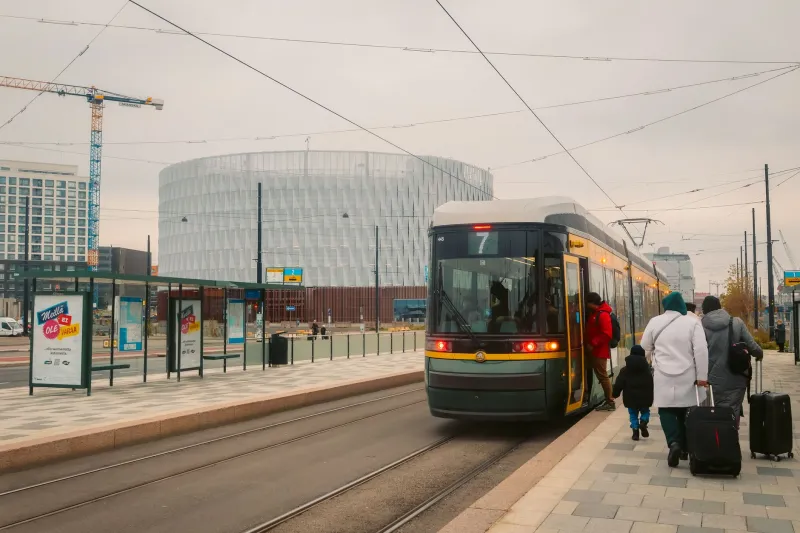
If you've ever stood on a sweltering subway platform in Washington, D.C., watching a third consecutive delayed train crawl past on the status board, the idea of a city where public transit actually works might sound like fiction. But spend a week riding the rails in Tampere, Finland, and that fiction starts to feel uncomfortably real.
Tampere — a city of roughly 240,000 people nestled between two lakes in southern Finland — opened its modern tram line, Raitiotie, in 2021. It's not just functional. It's fast, quiet, climate-controlled, and so punctual that locals joke you can set your watch by it. For American visitors used to the controlled chaos of the MTA or the perpetual "service disruptions" of the MBTA, riding Tampere's tram for the first time feels a little like discovering the rest of the world figured something out while the US was looking the other way.
So what exactly did Tampere get right — and what would it take for American cities to follow suit?
Starting From Scratch (Sort Of)
Tampere isn't a transit newcomer. The city actually had a tram system back in the early 20th century, which was eventually dismantled — a fate shared by dozens of American cities that ripped out their streetcar networks after World War II in favor of the automobile. The difference is that Tampere decided to rebuild.
The new Raitiotie line opened its first phase in 2021 after years of planning and construction, with a second phase completed in 2023 and further expansion already underway. The system uses modern low-floor trams that are fully accessible, runs on a dedicated right-of-way that keeps cars out of the way, and integrates seamlessly with buses and regional rail through a single ticketing platform called Nysse.
That last part — the integrated ticketing — is something American cities have struggled with for decades. In many US metros, transferring between subway, bus, and commuter rail still means juggling multiple apps, fare cards, or even cash. In Tampere, one ticket covers the whole network. Simple.
The Cost Question Americans Always Ask
Here's where things get interesting for a US audience. One of the most common objections to public transit investment in America is cost — both the upfront capital expense and the ongoing operational budget. Tampere's tram project wasn't cheap; the full network is expected to cost over a billion euros by the time all phases are complete. But consider what that buys.
A single tram ride in Tampere costs around €3.20, with day passes, monthly subscriptions, and reduced fares for students and seniors making regular commuting significantly cheaper. Compare that to New York City's $2.90 base fare — which sounds similar until you factor in that the NYC subway system is crumbling, routinely delayed, and hasn't seen meaningful infrastructure investment in decades despite being one of the most expensive transit systems in the world to operate.
Tampere's investment is also designed with a long horizon in mind. The tram infrastructure is built to last 30 to 50 years with proper maintenance — a stark contrast to the "patch it and pray" approach that defines much of American transit spending.
What Transit Experts Are Saying
Urban mobility researchers who've studied Tampere's model point to a few key factors that set it apart from failed or struggling transit projects in the US.
First, political continuity. Tampere's tram project had consistent support across multiple city administrations. In the US, major transit projects often get canceled or gutted when leadership changes — see the long, painful saga of various California high-speed rail debates or the constant stop-start history of light rail proposals in cities like Nashville and Indianapolis.
Second, land use planning went hand in hand with transit planning. New residential and commercial development along the Tampere tram corridor was deliberately encouraged, which increases ridership organically and helps justify the infrastructure investment. American cities often build transit in areas where density doesn't yet exist and then wonder why nobody rides it.
Third — and this one stings a little — Tampere simply built the thing. No decades of environmental reviews that go nowhere. No ballot initiative that passes and then gets tied up in litigation. The city identified a need, secured funding (a mix of municipal budget and national government support), and executed.
The Frequency Factor
Ask any transit rider what they want most, and the answer is almost always the same: trains and buses that come often enough that missing one doesn't ruin your day. Tampere's tram runs every 7 to 10 minutes during peak hours and maintains solid frequency throughout the day and into the evening. That reliability changes how people relate to the system.
In contrast, many American light rail and bus rapid transit systems run every 15 to 30 minutes — often less on weekends — which means riders have to plan their entire day around the schedule rather than just showing up. The result is a system that feels like a last resort rather than a genuine transportation option.
Frequency, it turns out, is freedom. And Tampere has figured that out.
Lessons Worth Stealing
None of this is to say American cities are hopeless. Some metros — Denver, Houston, and Salt Lake City among them — have made real strides with modern light rail. But the gap between what's possible and what currently exists in most of the US is enormous, and Tampere offers a useful blueprint.
A few takeaways worth highlighting:
- Commit to dedicated lanes. Trams and buses stuck in traffic aren't public transit — they're just slow cars. Tampere's tram has its own right-of-way, which is why it's fast.
- Integrate fares across modes. One app, one ticket, one system. Stop making riders do math.
- Build where people already are. Density-first transit planning works. Transit-first density planning also works. Doing neither doesn't.
- Think in decades, not election cycles. The best transit systems in the world took time, political will, and sustained investment to build. There are no shortcuts.
Coming to See It for Yourself?
If you're visiting Tampere and want to experience the tram system firsthand, download the Nysse app before you arrive. It handles journey planning, real-time arrivals, and ticketing all in one place. The tram runs through the city center, connecting major hubs like Tampere Central Station, the Ratina shopping district, and the Hervanta university campus.
Riding it isn't just practical — it's honestly a little bit of a revelation. And if you happen to be a city planner from back home, maybe take some notes.