How Tampere's Tram System Quietly Solved Problems That Are Bankrupting US Light Rail Projects
If you've ever waited 40 minutes for a Portland MAX train that was supposed to come every 15, or watched Minneapolis spend a decade arguing about a single light rail extension, you might find yourself wondering whether American cities are fundamentally bad at building transit. The answer, honestly, is a little complicated. But spending time with Tampere's tram network has a way of clarifying things.
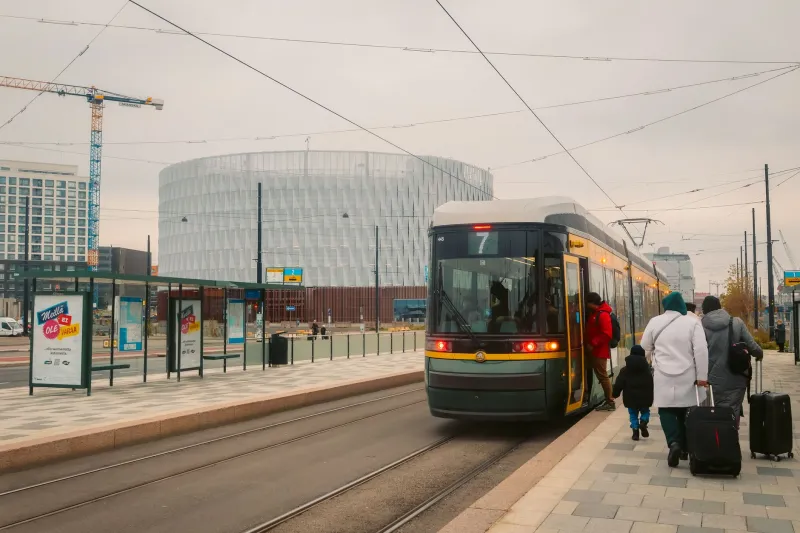
Tampere's modern tram system — officially launched in 2021 after years of careful planning — isn't flashy in the way American infrastructure projects tend to be. There's no ribbon-cutting ceremony with a governor in a hard hat. There's just a tram that shows up when it's supposed to, connects to the buses waiting for it at the stop, and moves people efficiently through a city of about 250,000. That reliability, it turns out, is the whole point.
Starting With the Right Question
Most American light rail projects begin with a political question: Where do we want a train? Tampere started with a different one: How do people actually move through this city, and what's getting in their way?
The difference sounds small, but it reshapes everything downstream. When you design around real travel patterns rather than political boundaries or real estate interests, you end up with a route that people actually use. Tampere's tram line runs along the city's most heavily traveled corridor — connecting the central railway station, major employment hubs, the university, and key residential neighborhoods in a single coherent spine. It doesn't loop awkwardly around a stadium or terminate in a parking garage at the edge of town.
American planners, often under pressure to spread investment across council districts or satisfy competing stakeholders, frequently end up with routes that serve political logic more than commuter logic. The result is underperformance baked in before a single rail is laid.
The Bus Connection Isn't an Afterthought
One of the quieter achievements of Tampere's system is how well the tram integrates with bus service. In a lot of US cities, light rail and bus networks feel like they were designed by different agencies who never spoke to each other — because often, they were. Schedules don't sync, transfer points are uncomfortable, and the whole experience punishes anyone trying to make a two-leg journey.
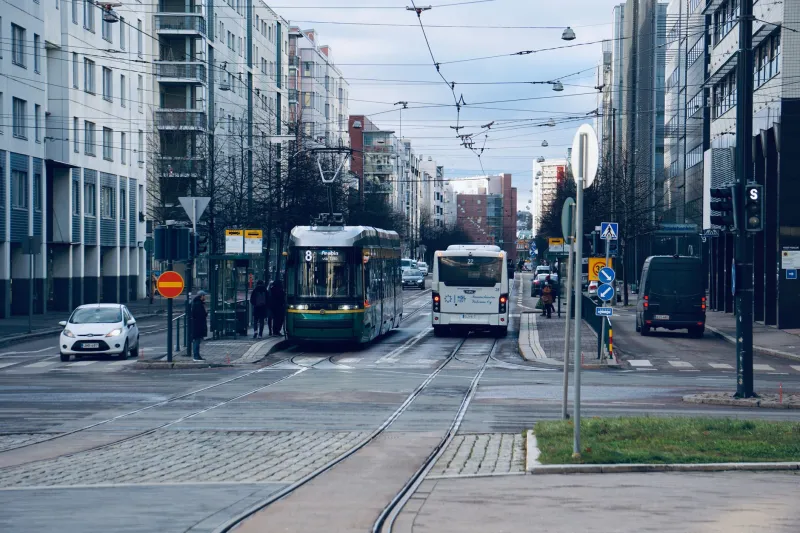
In Tampere, buses are explicitly timed and routed to feed the tram. Transfer stops are covered, logical, and placed where people are actually coming from. The regional transit authority, Nysse, manages both modes under one umbrella, which means there's no turf war between bus operators and rail operators over funding or routing decisions. When the tram arrives, there's a bus waiting. When the bus arrives, the tram is close behind.
For American cities where bus and rail agencies operate in separate silos — or where political infighting keeps them from coordinating — this kind of seamless handoff feels almost aspirational. It shouldn't. It's just good operations management.
Land Use Came First, Not Last
Here's something that tends to surprise American transit observers: Tampere treated land-use planning as a prerequisite for the tram, not a follow-up project. Zoning along the tram corridor was adjusted before construction began, allowing higher-density residential and mixed-use development to take shape in anticipation of the line.
In the US, the typical sequence is reversed. A light rail line gets built, planners hope that development will follow, and then they're surprised when it doesn't — because the zoning around the stops still requires five acres of surface parking and caps building heights at two stories. Transit-oriented development becomes a buzzword without the actual policy backbone to make it happen.
Tampere's approach ensures that the tram has riders baked into the corridor from the start. Density creates demand, demand justifies frequency, and frequency makes the whole system more useful for everyone. It's a virtuous cycle, but it only works if the land-use decisions happen in the right order.
Funding That Doesn't Depend on a Miracle
American light rail projects have a funding problem that goes beyond just money. They depend on a complicated patchwork of federal grants, state appropriations, local bond measures, and private partnerships — each with its own timeline, conditions, and political vulnerabilities. A project can be fully designed and partially funded, then stall for years because one piece of the financing fell through.
Tampere's tram was financed through a more stable combination of city investment, national government support, and a financing model that kept decision-making relatively centralized. That doesn't mean it was cheap or easy — the city took on real financial commitment. But the governance structure meant that when decisions needed to be made, there was a clear authority to make them.
For US transit advocates, the lesson here isn't necessarily to replicate Finland's funding model wholesale — the political systems are too different for a direct copy. But it's worth examining how fragmented American transit financing creates delay, cost overruns, and watered-down projects. Streamlining that process, even partially, could make a measurable difference.
Frequency Is the Product
Ask most Tampere residents how often the tram runs and they'll shrug — not because they don't know, but because it comes often enough that they've stopped tracking it. That's the goal. When service is frequent enough that you don't need to check a schedule, transit becomes genuinely useful for spontaneous trips, not just the commute you've planned around.
Many American light rail systems run every 15 to 20 minutes off-peak, which sounds reasonable until you're standing on a platform at 7 p.m. trying to get home and doing the math on whether an Uber would be faster. Tampere keeps headways tight enough that the tram functions more like a subway than a scheduled bus — you show up, and it comes.
This requires political will to fund operating costs, which is where a lot of US systems fall short. Capital investment gets the headlines; operating budgets get cut. The result is shiny new infrastructure that runs infrequently and frustrates the riders it was built to attract.
What US Cities Can Actually Take From This
None of this is meant to suggest that Tampere's model can be copy-pasted onto Denver or Salt Lake City. Context matters — Finnish cities have different densities, political cultures, and histories with public investment. But there are a few genuinely transferable principles worth sitting with.
Design routes around how people move, not where political pressure points are. Integrate bus and rail from the planning stage, not as a retrofit. Change the zoning before you break ground, not after. Fund operations with the same seriousness as capital construction. And run the thing frequently enough that people stop thinking of it as a scheduled service and start thinking of it as infrastructure.
Tampere didn't reinvent transit. It just executed the fundamentals with unusual discipline. For American cities still chasing the dream of a functional light rail network, that discipline might be the hardest thing to import — and also the most valuable.