Leaving the Car Keys Behind: How American Expats Are Rediscovering Freedom in Tampere's Transit Ecosystem
For most Americans, the car is not merely a vehicle — it is a prerequisite for participation in daily life. Groceries, employment, school drop-offs, medical appointments: virtually every essential activity in the United States is engineered around automobile access. So when a growing cohort of American expatriates and remote workers began relocating to Tampere, Finland, they arrived carrying deeply ingrained assumptions about how cities function. What they discovered, almost universally, was that those assumptions no longer applied.
Tampere — Finland's third-largest city, situated between two great lakes in the country's southwest interior — has quietly built one of the most coherent and rider-friendly transit networks in Northern Europe. For Americans accustomed to sparse bus routes, unreliable schedules, and the social stigma attached to not owning a vehicle, the contrast is striking. And increasingly, it is drawing people across the Atlantic.
Why Tampere, and Why Now
The remote work revolution that reshaped global employment patterns after 2020 gave many Americans geographic flexibility they had never previously enjoyed. Rather than defaulting to the usual destinations — Lisbon, Barcelona, Berlin — a subset of location-independent workers began researching Nordic cities. Tampere emerged consistently in those searches: affordable by European standards, English-friendly, and in possession of a transit system that received high marks from international livability assessments.
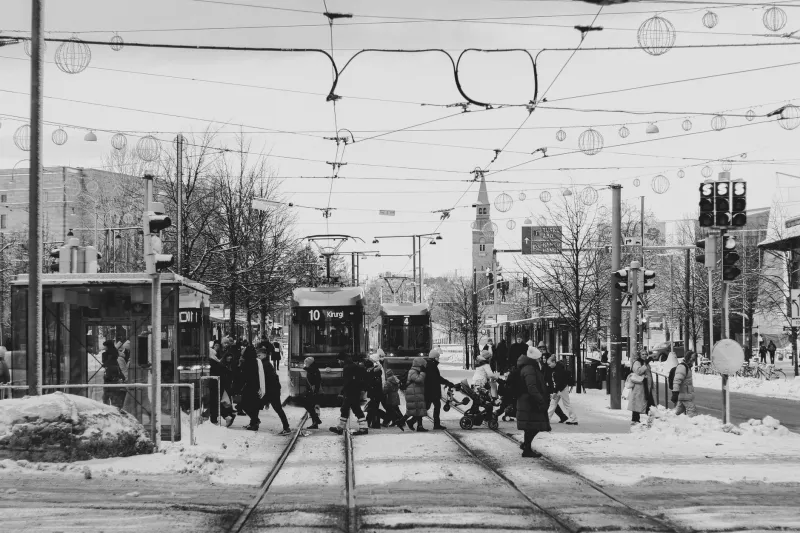
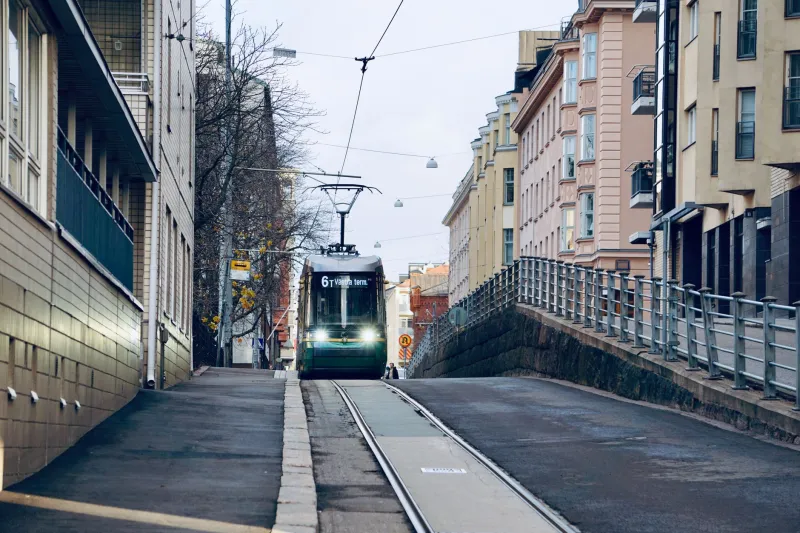
The city's tram network, which underwent significant modernization in recent years, became something of a calling card. Smooth, frequent, and fully integrated with the regional bus system, it offered the kind of predictable, high-frequency service that American cities often promise and rarely deliver. For prospective movers researching life in Tampere, the transit infrastructure was not a peripheral consideration — it was frequently the deciding factor.
The First Ninety Days: Unlearning the Car Reflex
Americans who relocate to Tampere almost universally describe an adjustment period they refer to, with varying degrees of humor, as "unlearning the car reflex." The instinct to reach for keys before leaving the house — to calculate driving time, to factor in parking costs, to accept traffic as an immutable condition of modern life — does not disappear overnight.
Recent arrivals from cities such as Atlanta, Phoenix, and suburban Dallas report that the first weeks involved a kind of cognitive rewiring. Distances that would have prompted a ten-minute drive in the United States turned out to be walkable. Errands that required a car became manageable on foot or by tram. The mental overhead associated with vehicle ownership — insurance renewals, fuel costs, maintenance scheduling, parking permits — simply evaporated.
What replaced it was something many described as unexpected: a sense of spatial awareness. Without the insulating shell of a personal vehicle, they began to experience the city differently. They noticed neighborhoods, encountered neighbors, and developed an intuitive understanding of Tampere's geography that months of driving would never have produced.
The Financial Arithmetic Nobody Warned Them About
For many American expats, the financial implications of car-free living in Tampere arrived as a genuine surprise — not because they hadn't anticipated savings, but because the magnitude exceeded their projections.
The average American household spends in excess of $10,000 annually on vehicle-related expenses when insurance, fuel, depreciation, maintenance, and financing costs are combined. In Tampere, a monthly transit pass provides comprehensive access to the city's bus and tram network at a fraction of that cost. Regional passes extend coverage further, connecting riders to surrounding municipalities without additional vehicles or elevated expense.
Expats who relocated from high-cost American metros noted an additional layer of financial relief: the elimination of parking costs. In cities like San Francisco or Boston, monthly parking fees alone can approach or exceed the cost of a Tampere transit pass. The arithmetic, once laid out plainly, is difficult to dispute.
Beyond direct transportation costs, several American arrivals observed secondary savings they had not anticipated. Without a car to maintain, they became less reliant on suburban big-box retail — the kind of shopping that requires a vehicle to transport bulk purchases. Instead, they shopped more frequently at local markets, spent less per trip, and wasted less food. Transit-oriented living, they discovered, had implications that extended well beyond the morning commute.
What the Schedules Actually Mean
One of the more nuanced adjustments American expats describe involves recalibrating their relationship with transit schedules. In most American cities, published bus schedules function more as aspirational documents than operational commitments. Delays are routine, real-time tracking apps are frequently inaccurate, and riders learn to build substantial buffers into any journey involving public transportation.
In Tampere, the schedules mean what they say. Arrivals from American cities consistently express a version of the same sentiment: they did not fully believe the trams and buses would adhere to their published times until they had experienced it repeatedly. The reliability is not incidental — it is the product of sustained investment, operational discipline, and a civic culture that treats public transit as a genuine public good rather than a social service of last resort.
This reliability has practical consequences that compound over time. Expats report being able to plan their days with a precision that was simply unavailable in their previous cities. Medical appointments, school pickups, dinner reservations, work meetings: all become schedulable events rather than exercises in hopeful estimation.
Beyond Transportation: The Lifestyle Shift
Perhaps the most frequently cited and least anticipated consequence of relocating to Tampere is what might be called the lifestyle dividend — a cluster of changes in daily behavior, physical health, and social engagement that flow indirectly from transit-oriented living.
Without a car, walking becomes a primary mode of movement for shorter distances. Expats report significant increases in daily step counts, often without any deliberate intention to exercise more. The incidental physical activity embedded in transit use — walking to stops, navigating platforms, moving through the city on foot between destinations — accumulates in ways that sedentary car commuting simply does not.
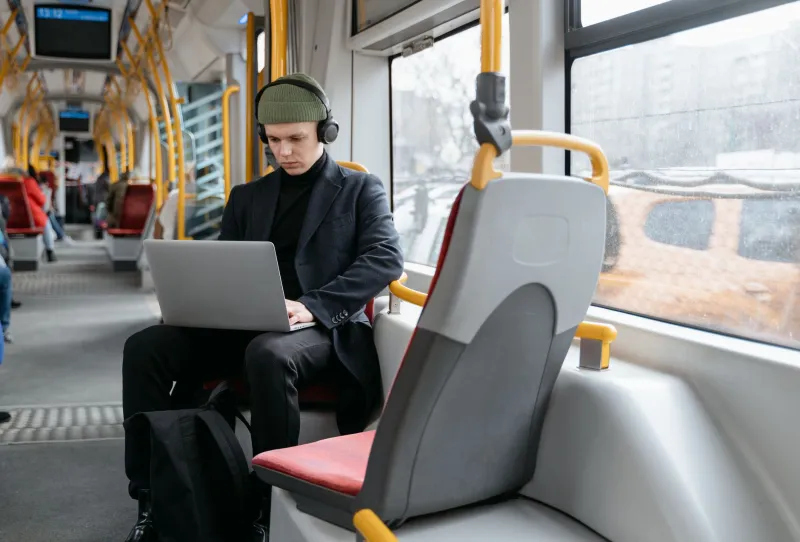
Social patterns shift as well. Transit riders share space with their neighbors in ways that drivers do not. Regular users of the same tram lines begin to recognize one another. The city becomes, over time, a more legible and socially connected place.
For families with children, the implications are particularly significant. American parents accustomed to managing school runs, extracurricular logistics, and weekend activities entirely by car often describe Tampere's transit system as genuinely liberating. Older children can navigate the network independently, reducing parental coordination burdens and fostering a sense of autonomy that car-dependent environments rarely permit.
A Different Kind of Freedom
The word most commonly used by American expats when describing life in Tampere is, perhaps paradoxically, "freedom." In a country where automobile ownership is culturally synonymous with independence, the notion that relinquishing a car could produce greater freedom requires some explanation.
What they describe is freedom from obligation: from fuel costs and insurance premiums, from maintenance anxiety, from the cognitive load of navigation and parking. Freedom, also, from the physical and temporal costs of car commuting — the hours surrendered to traffic, the stress accumulated behind the wheel, the sedentary hours that accumulate into health consequences over years.
Tampere's transit infrastructure does not merely move people from one location to another. For the Americans who have relocated here, it has fundamentally reorganized the terms of daily life — and in doing so, has offered a vision of urban mobility that their home cities have rarely managed to approximate.
For those still weighing the decision, the message from those who have already made the move is consistent: the transit system is not simply a feature of life in Tampere. For many, it is the reason they came — and the reason they stayed.