Life Beyond the Highway: How Tampere's Transit Infrastructure Redefines Affordability and Daily Freedom
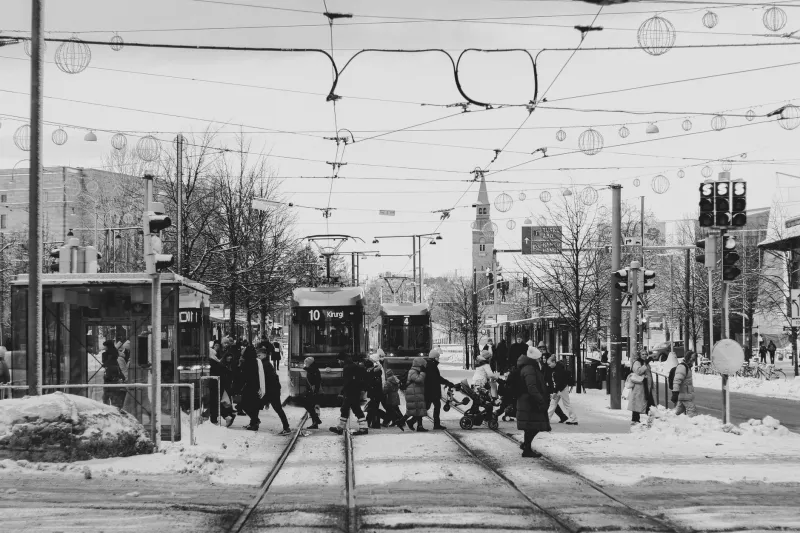
Every weekday morning, roughly 3.5 million Americans sit in their cars on suburban arterials and interstate on-ramps, burning fuel, burning time, and — by most accounts — burning out. The average American commuter spends approximately 27 minutes each way getting to work, according to U.S. Census Bureau data, but in sprawling metro corridors like Atlanta, Dallas, or the outer rings of Los Angeles, that figure climbs considerably higher. Meanwhile, in Tampere, Finland's third-largest city, a different kind of morning unfolds entirely.
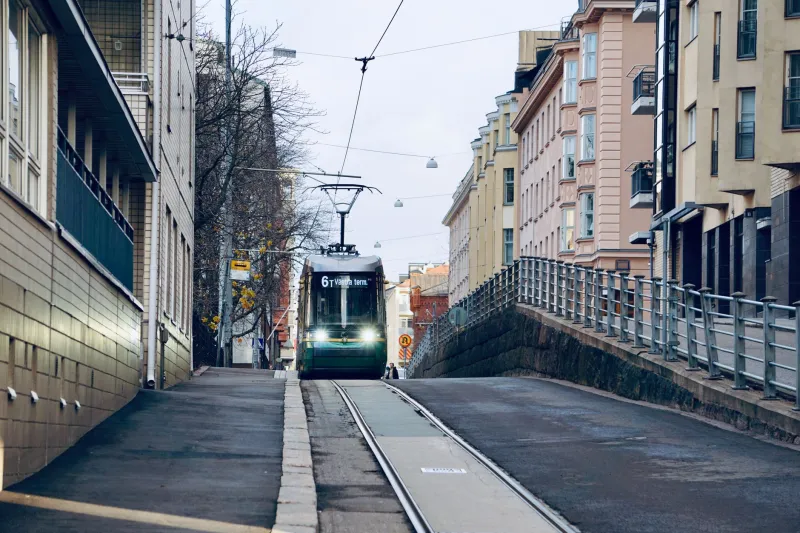
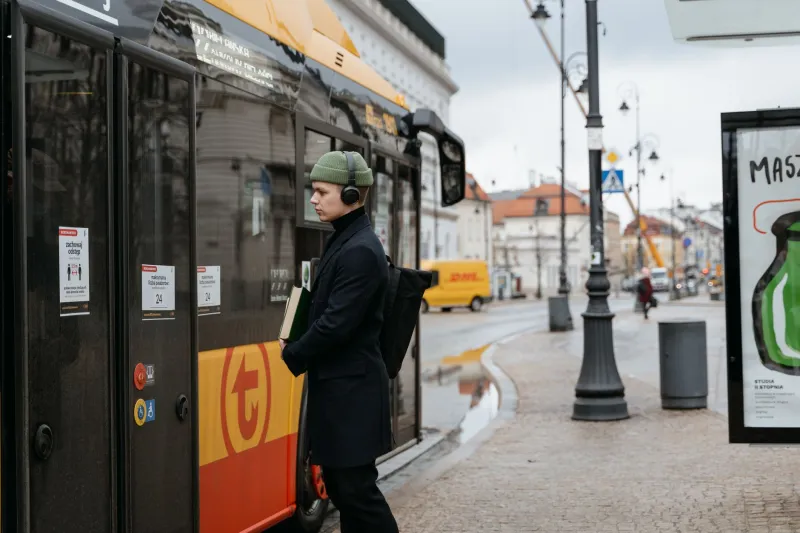
Tampere's residents board trams, hop on regional buses, and connect across a transit network that the city has deliberately engineered around human movement rather than vehicle throughput. The result is not merely a transportation system — it is a structural advantage that shapes where people live, how much they spend, and how much of their day they actually own.
The True Cost of the American Commute
Before comparing transit systems, it is worth establishing what American suburban commuting actually costs — and the figure is rarely just a gas receipt.
The American Automobile Association estimates that the total annual cost of owning and operating a new vehicle in the United States now exceeds $12,000, factoring in depreciation, insurance, financing, maintenance, fuel, and fees. For households in suburban corridors where public transit is either nonexistent or impractical, that expense is non-negotiable. Many two-earner households carry two vehicles, pushing that annual outlay past $24,000 before a single mortgage payment is made.
Then there is time. A commuter driving 45 minutes each way, five days a week, loses roughly 390 hours annually to transit — the equivalent of nearly ten full work weeks. That time is largely unrecoverable: driving demands attention in a way that makes productive or restorative use nearly impossible.
In Tampere, a monthly transit pass — covering unlimited travel across the city's bus and tram network — is priced at approximately €59 for adults, with discounted rates available for students, seniors, and low-income riders. Annual transit costs for a Tampere resident relying exclusively on public transportation come in at a fraction of what their American suburban counterpart spends on a single vehicle. The gap in disposable income is substantial.
What Integration Actually Looks Like
One of the most significant — and frequently misunderstood — aspects of Tampere's transit advantage is the degree to which its network functions as a unified system rather than a collection of disconnected services.
The Tampere regional transit authority, Nysse, coordinates bus routes, tram lines, and connections to regional rail in a manner that minimizes transfer friction. Schedules are synchronized. A passenger departing a tram at Tampere Central Station can typically board a connecting bus within minutes, not because they were lucky, but because the system was designed with that transfer in mind.
For American visitors accustomed to transit systems where bus routes operate independently of rail lines, where apps display different agencies' schedules in separate interfaces, and where a missed connection can mean a 30-minute wait on a wind-exposed platform, Tampere's integration feels almost disarmingly logical. It is a system that appears to assume passengers have places to be.
Expat Perspectives: The Adjustment Is Real, and So Are the Rewards
Several Americans who have relocated to Tampere for work or study describe a transition period during which the absence of a personal vehicle feels conspicuous. The instinct to drive — to a grocery store three blocks away, to a friend's apartment across the city, to a weekend destination — is deeply conditioned in American culture.
That instinct, most report, fades within weeks.
One software engineer from suburban Ohio who relocated to Tampere three years ago described the shift plainly: the realization that his commute had dropped from 55 minutes of driving to 18 minutes on the tram was not gradual — it was immediate and permanent. He noted that he had reclaimed time he had not realized he was losing, and that the financial savings had allowed him to live closer to the city center than he could have afforded in Columbus.
A graduate student from Texas offered a complementary observation: without a car payment, insurance, or fuel costs, her monthly expenditure on transportation dropped by more than $700. That margin, she noted, covered rent on a well-located apartment within walking distance of two tram stops.
Housing Proximity and the Transit Premium
In American suburban markets, proximity to transit — where it exists at all — often commands a price premium that can offset savings elsewhere. In Tampere, transit access is sufficiently widespread that the concept of a "transit premium" applies differently. Because the network covers the city comprehensively, a broad range of housing options sit within reasonable walking distance of a stop.
This distribution matters enormously for livability. American suburban residents frequently face a binary: live close to employment centers and pay urban housing costs, or live affordably at the periphery and absorb the commute. Tampere's network compresses that tradeoff. A resident living in Hervanta, one of Tampere's larger residential districts, can reach the city center via tram in under 20 minutes — a connection that makes peripheral housing genuinely viable without the commute penalty that peripheral American suburbs impose.
The Lifestyle Dividend
Beyond the financial calculus, there is a quality-of-life dimension to Tampere's transit model that resists easy quantification but emerges consistently in expat accounts.
Time spent on a tram or bus is not dead time in the way that highway driving is dead time. Passengers read, respond to messages, listen to podcasts, or simply observe the city passing outside the window. The cognitive load of navigating traffic — the vigilance, the frustration, the reactive decision-making — is entirely absent. Many Tampere commuters describe their transit ride as a genuine decompression period, a buffer between work and home that driving rarely provides.
There is also the physical dimension. Transit use inherently incorporates walking — to stops, between connections, from the final stop to one's destination. Studies consistently associate transit-oriented lifestyles with higher baseline physical activity levels compared to car-dependent alternatives. In a country that already ranks well on international health indices, Finland's transit infrastructure is not an incidental feature — it is structurally connected to the way residents move through their days.
A Model Worth Examining
Tampere's transit system did not emerge by accident. It reflects decades of deliberate urban planning decisions that prioritized density, mixed-use development, and public mobility infrastructure over highway expansion and surface parking. The 2021 launch of the Tampere tramway represented a significant investment in that philosophy — a commitment to building a city around movement patterns that serve residents rather than vehicles.
For American observers, particularly those navigating the compounding costs of suburban car dependency, Tampere's model offers more than an interesting comparison. It offers a proof of concept: that a mid-sized city can be built — or rebuilt — around transit in ways that deliver measurable improvements in affordability, time, and daily quality of life.
The highway will always be there. The question is whether it has to be the only option.