From Passive Rider to Power User: Mastering Tampere's Transit Apps the Way Locals Do
Most visitors to Tampere treat the city's transit apps the same way they treat a hotel alarm clock—useful for one basic function, then largely ignored. Experienced locals, however, treat these platforms as something closer to a personal logistics engine. The difference between a frustrating commute and a seamlessly orchestrated one often comes down to knowing which features to activate, which data layers to trust, and how to read the subtle signals that the system broadcasts in real time.
For American travelers accustomed to the relatively sparse digital ecosystems surrounding transit in cities like Houston or Phoenix—or even the patchwork app experiences in Chicago and Los Angeles—Tampere's integrated approach can feel like stepping into a different decade entirely. The question is not whether the tools are available. They are. The question is whether you know how to use them.
Understanding the Ecosystem Before You Tap Anything
Tampere's regional transit authority, Nysse, anchors the digital experience through its official app and web portal, but the ecosystem extends further. Third-party integrations, real-time open data feeds, and multimodal platforms like Whim layer on top of the core scheduling infrastructure to create a remarkably dense information environment.
Before optimizing anything, it helps to understand what data the system is actually generating. Nysse publishes real-time vehicle location data using the GTFS-RT standard—the same format used by Google Maps and Apple Maps—which means that any app consuming that feed is working from the same live information. When your app says a bus is two minutes away, that figure is not an estimate based on a static schedule. It is drawn from GPS telemetry updated every few seconds.
This distinction matters enormously for transfer planning, which we will address shortly.
The Crowding Prediction Feature Most Visitors Never Enable
One of the most underutilized capabilities within Tampere's transit data environment is crowding forecasting. Based on historical ridership patterns and, increasingly, anonymized real-time passenger load data, certain app configurations allow users to see predicted occupancy levels for specific departures before they ever leave the house.
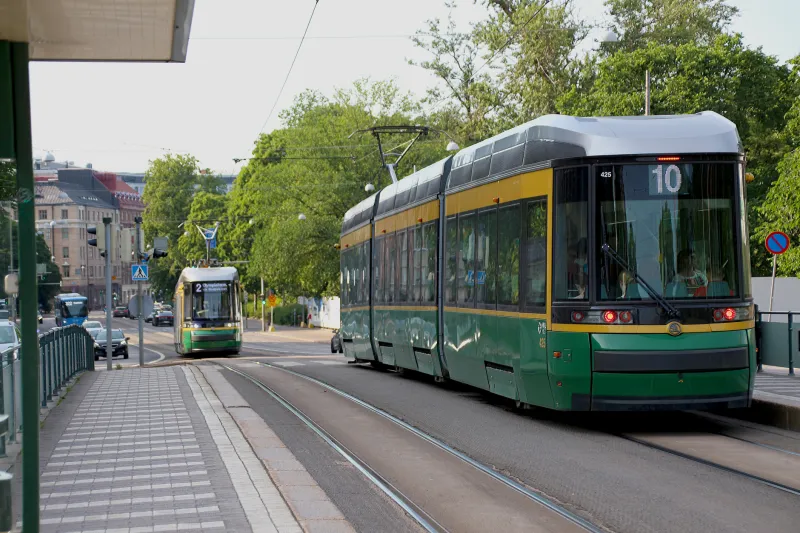
For an American commuter, this concept may feel novel. The ability to select a slightly earlier or later departure specifically to avoid a packed tram car—without sacrificing significant travel time—is a behavioral shift that locals have quietly normalized. During morning peak hours between roughly 7:30 and 8:45 a.m., Tampere's tram line 3 in particular sees concentrated ridership. Power users know to consult occupancy indicators and adjust their departure window by as little as eight minutes to secure a comfortable, uncrowded ride.
To access this feature, look for occupancy or load indicators within the Nysse journey planner or compatible third-party apps. Not every interface surfaces this data by default—you may need to toggle an advanced settings layer or select a more detailed route view.
Transfer Alerts and the Art of the Intelligent Connection
Seamless transfers are where casual riders and experienced commuters diverge most visibly. A casual rider accepts the published connection window at face value. A local knows that a scheduled four-minute transfer between a bus and a tram is genuinely comfortable on a clear Tuesday afternoon and genuinely stressful during a January snowstorm when boarding queues slow entry.
Tampere's more sophisticated app configurations offer dynamic transfer alerts—push notifications that fire when a connecting vehicle is running ahead of or behind schedule by a threshold you define. Setting this threshold to 90 seconds rather than the default three minutes gives you an earlier warning window and more time to adapt, whether that means quickening your pace or identifying an alternative route before you have already committed to a platform.
Within the Nysse app, these alerts are configured under notification preferences. Select your most frequent connections and assign each one a monitoring window. The system will handle the rest, flagging anomalies so you are never caught flat-footed at a transfer point.
Saving Routes as Living Documents, Not Static Bookmarks
Many commuters save their regular routes once and never revisit them. Locals treat saved routes as living configurations that evolve with the season, the time of day, and even the day of the week.
Tampere's timetables shift between weekday, Saturday, and Sunday service patterns, and certain routes operate on reduced frequency during Finnish public holidays. Saving three versions of your most common journey—one for standard weekdays, one for Fridays when evening service patterns shift slightly earlier, and one for weekends—takes approximately ten minutes to configure and pays dividends across dozens of subsequent trips.
Additionally, Tampere's transit apps support departure time offsets, allowing you to build in a personal buffer that accounts for your specific walk to the nearest stop. If your nearest stop is a seven-minute walk from your accommodation, configuring the app to surface departures with at least a nine-minute lead time eliminates the low-grade anxiety of calculating margins mentally every morning.
Reading the Live Map Like a Local
The live vehicle map, available within most Tampere-compatible transit apps, is frequently dismissed as a novelty. Locals use it as a decision-making tool.
When two buses on the same route are running in close succession—a phenomenon transit planners call "bus bunching"—the live map reveals this before the schedule does. Seeing two route 25 buses within 400 meters of each other tells an experienced rider that the first bus will likely be crowded and slow due to accumulated passenger demand, while the second will be emptier and potentially faster. Choosing the second bus, even if it means waiting an additional four minutes at your stop, often results in a faster door-to-door journey.
This kind of real-time tactical decision-making is invisible to anyone relying solely on the next departure countdown. The map view makes it explicit.
Integrating Cycling and Walking Legs for the Final Mile
Tampere's transit app ecosystem connects natively with the city's city bike network, allowing users to plan journeys that blend bus or tram segments with short cycling legs. For American visitors staying near the city center, this integration is particularly valuable during the warmer months when city bikes are available at dozens of stations.
Configuring your app to include cycling as an acceptable mode—and setting your maximum cycling distance preference—allows the routing algorithm to surface options that might shave significant time off journeys that would otherwise require an additional bus connection. A route that the app initially presents as a 28-minute two-bus journey may have a 19-minute tram-plus-bike alternative that the default settings never surface.
The Compounding Effect of Small Optimizations
No single feature described here saves a dramatic amount of time on its own. A two-minute improvement here, a four-minute improvement there—these increments feel modest in isolation. But commuters who apply even three or four of these strategies consistently across a full working week report cumulative time savings that are genuinely significant.
Tampere's transit infrastructure is already among the most efficient in Northern Europe. The apps that sit on top of it are designed with a similar philosophy: precision, reliability, and respect for the user's time. For American visitors and newcomers willing to invest a short learning curve, the return is a commute that feels less like a passive wait and more like a coordinated, data-informed journey—exactly the way the locals have been doing it all along.