Commuting Without the Cost to Your Mind: How Tampere's Transit Culture Offers American Professionals a Healthier Way to Work

For millions of Americans, the morning commute is less a journey and more an ordeal. Whether it is the stop-and-go crawl along a Los Angeles freeway, the unpredictable merge chaos of Atlanta's I-285, or the pothole-laden surface streets of a mid-sized Midwestern city, driving to work has become one of the most reliably stressful parts of the professional day. The physical toll is well documented — elevated cortisol levels, disrupted sleep patterns, and cardiovascular strain have all been linked to long commutes in car-dependent environments.
What is discussed far less frequently is the alternative that exists in cities like Tampere, Finland — and what that alternative genuinely means for the mental and emotional health of those who choose it.
The Anxiety Architecture of American Driving
To understand what Tampere offers, it helps to first name what American commuters are carrying. Research published by the American Psychological Association has consistently identified commuting as one of the leading sources of daily stress among working adults. The variables that make driving particularly corrosive to mental health are not simply about distance — they are about unpredictability, lack of control, and cognitive load.
When a driver sits behind the wheel, they are required to sustain vigilant attention for the entire duration of the journey. Every lane change, every red light, every aggressive merge demands a response. That sustained alertness is not neutral — it depletes the same cognitive resources that professionals need for creative thinking, problem-solving, and emotional regulation throughout the workday. By the time many American workers arrive at the office, they have already spent a significant portion of their mental reserves on the road.
This is the context in which Tampere's transit system begins to look not merely convenient, but genuinely therapeutic.
Predictability as a Psychological Asset
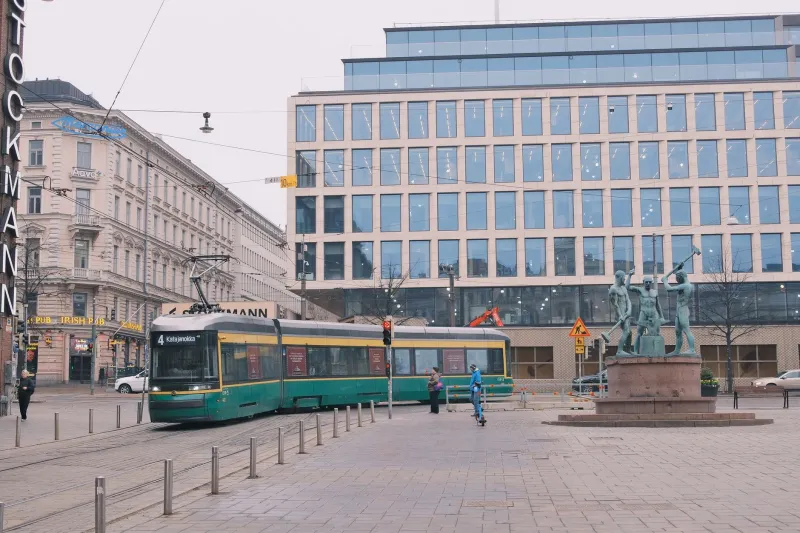
One of the most quietly powerful features of Tampere's public transportation network is its reliability. Trams and buses in the Tampere region operate on schedules that locals have come to depend upon with considerable confidence. Unlike a highway commute, where a single fender bender can add forty-five minutes to a journey with no warning, a transit commute in Tampere operates within a known and navigable framework.
For professionals who spend their working hours managing deadlines, client expectations, and organisational uncertainty, that predictability carries genuine psychological weight. Knowing that the tram will arrive at 7:43 and that you will be at your stop by 8:12 removes an entire category of morning anxiety. The commute becomes a fixed and manageable part of the day rather than a variable that can unravel everything that follows.
American expats who have relocated to Tampere for work frequently cite this shift as one of the first tangible changes they notice in their daily stress levels. The absence of that background hum of driving-related uncertainty — Will I hit traffic? Did I leave enough time? Is there construction today? — creates a kind of cognitive quiet that accumulates meaningfully over weeks and months.
Reclaiming the Commute as Personal Time
Perhaps the most underappreciated dimension of transit-based commuting is what it gives back in terms of usable time. A driver is, by definition, occupied. A transit rider is not.
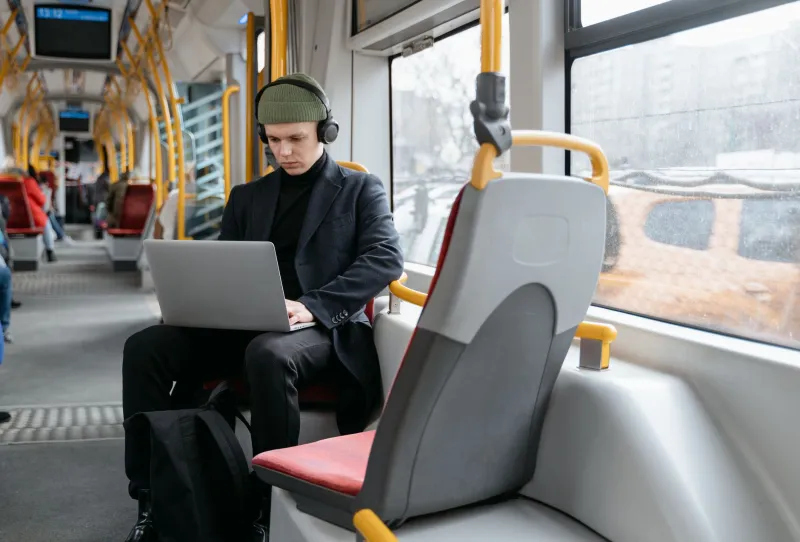
In Tampere, commuters on trams and buses are free to read, listen to podcasts, practice a language, correspond with colleagues, or simply sit in silence and allow their thoughts to settle before the workday begins. For professionals who feel perpetually pressed for time — a condition that is near-universal among American workers — this reclamation of the commute as personal space can feel quietly revolutionary.
Mindfulness practitioners and therapists increasingly point to unstructured, low-stimulation time as essential for mental restoration. The transit commute, particularly one that is comfortable and predictable, provides exactly this. Rather than arriving at work already depleted, a transit rider arrives having had twenty or thirty minutes of self-directed time — time that belongs entirely to them.
The Ambient Benefits of Reduced Responsibility
There is also something to be said for the psychological relief of not being responsible for a two-tonne vehicle moving at speed through a shared public space. Driving demands a particular kind of vigilance that is difficult to fully switch off. Many drivers report a residual tension that lingers even after they have parked and entered the office — a physiological readiness that the body does not immediately abandon.
Boarding a tram in Tampere transfers that responsibility entirely. The driver handles the vehicle; the passenger handles nothing. This reduction in active responsibility may seem trivial in isolation, but across five commuting days per week, fifty weeks per year, it represents a substantial reduction in accumulated stress loading.
For American professionals who are already managing high-stakes work environments, eliminating even one significant source of daily cognitive demand can create meaningful breathing room in the overall stress budget.
Social Texture and the Antidote to Isolation
Car commuting is, by its nature, an isolating experience. The driver sits alone in a sealed environment, separated from the surrounding city by glass and metal. Over time, this enforced solitude — even for those who value quiet — can contribute to a sense of disconnection from the communities through which they travel.
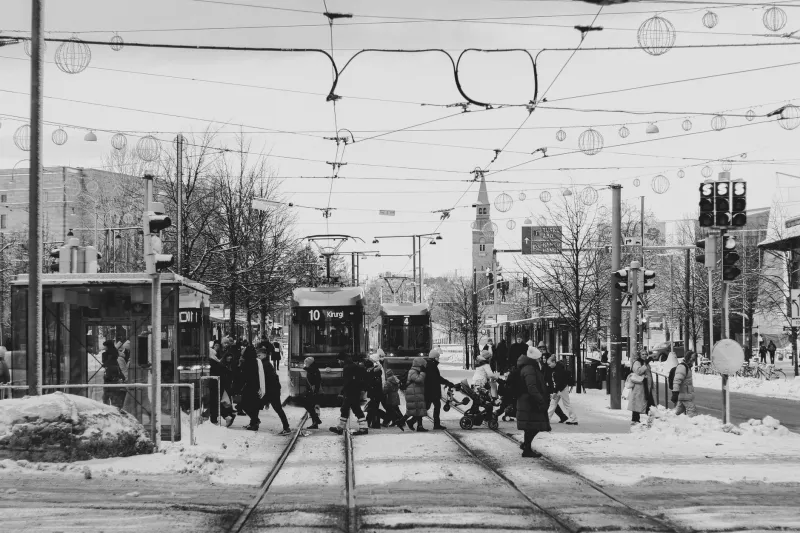
Tampere's transit system places riders in gentle, low-obligation proximity to other people. The experience is not necessarily social in an active sense — Finnish commuters are famously respectful of personal space and quiet — but it is communal in a passive and reassuring way. There is something grounding about sharing a journey with other members of a city, even in silence. For American professionals who relocate to Tampere and are still building social networks, that ambient sense of shared urban life can serve as an early and accessible form of community connection.
A Structural Invitation to Slow Down
Ultimately, what Tampere's transit culture offers stressed American professionals is something that no productivity app or wellness subscription can quite replicate: a structural invitation, built into the architecture of daily life, to move through the world at a more sustainable pace.
The city does not ask its commuters to optimise every moment or to treat the journey to work as wasted time to be minimised. Instead, it provides a system reliable enough to be trusted and comfortable enough to be genuinely inhabited. That shift — from commuting as something to be survived to commuting as something to be experienced — is, for many Americans who make the transition, one of the most unexpected and lasting gifts of life in Tampere.
For those considering a relocation, or simply evaluating what a different relationship with daily transportation might feel like, the evidence from Tampere is worth taking seriously. The trams run on time. The seats are available. And the return on investment, measured not in euros but in mental clarity and daily calm, is considerable.