Built for Everyone From the Ground Up: How Tampere's Transit System Reframes What Accessibility Actually Means
When Marcia Hendricks, a wheelchair user from Portland, Oregon, arrived in Tampere for a two-year research position, she braced herself. Navigating public transit as a person with a mobility impairment had, for most of her adult life, required advance planning, backup plans, and a considerable tolerance for frustration. What she encountered instead was something she had not anticipated: a system that appeared to have been designed with her in mind from the very beginning.
"I remember the first time I boarded a tram and the floor just met the platform," she recalls. "No ramp request, no waiting for an attendant, no apologetic shrug from the driver. I just rolled on. It sounds simple, but after twenty years of navigating American transit, it felt genuinely radical."
Her experience is not unique. Across Tampere's tram lines and bus network, a consistent philosophy of universal design—one that integrates accessibility as a baseline rather than an amendment—shapes how the city moves its residents. For Americans accustomed to the patchwork compliance model that governs most domestic transit systems, the difference is not merely technical. It is philosophical.
Compliance Versus Design: A Critical Distinction
The Americans with Disabilities Act, signed in 1990, set minimum accessibility standards for public transportation across the United States. Its impact has been meaningful: kneeling buses, audio stop announcements, and designated seating areas became legally mandated features in cities large and small. Yet the ADA is, by its nature, a floor rather than a ceiling. Many American transit agencies have done precisely what the law requires—and little more.
The result is a system that can feel improvised. Lifts malfunction and are slow to repair. Audio announcements cut out or are poorly calibrated. Tactile paving at stops is inconsistent. Ramp deployment on buses requires passengers to announce their needs in advance, placing the burden of accessibility on the individual rather than the infrastructure.
Tampere's approach inverts this logic. Rather than asking what the minimum standard requires, the city's transit planners have consistently asked what the full spectrum of users actually needs—and then built accordingly. The question driving design is not "are we compliant?" but "does this work for everyone?"
What Universal Design Looks Like on the Ground
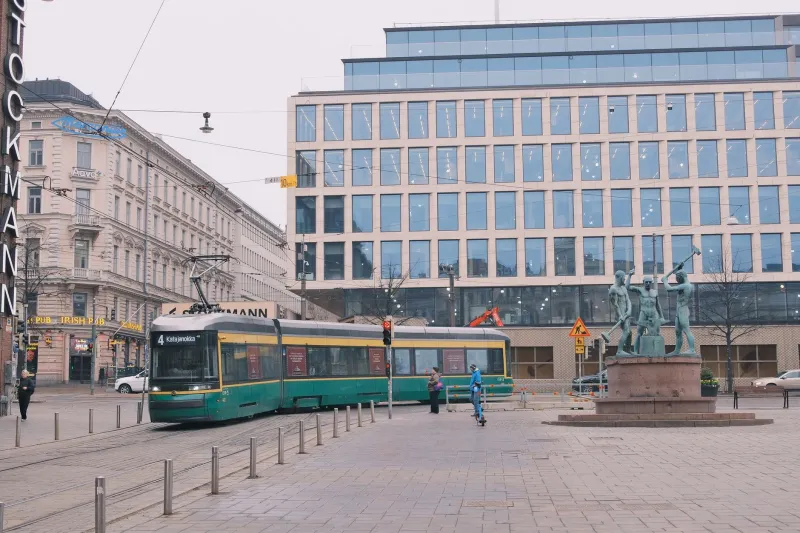
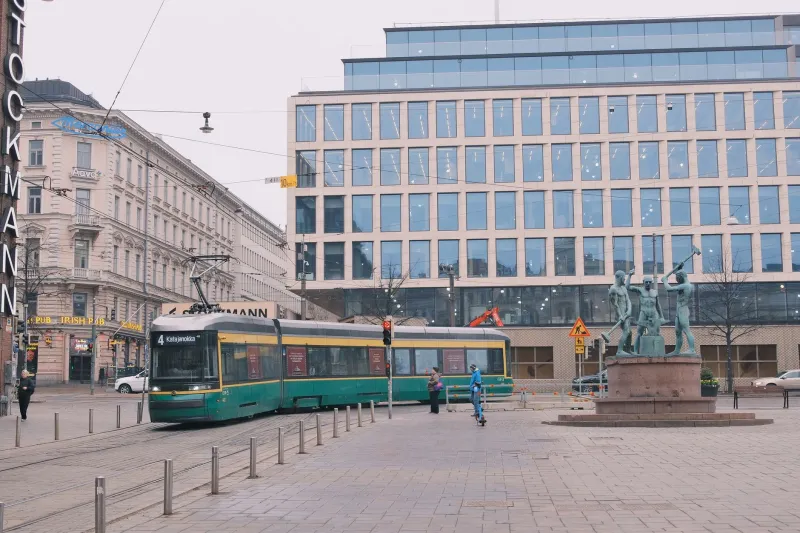
The Tampere tram network, which launched its modern incarnation in 2021, offers perhaps the most visible demonstration of this philosophy. Every tram stop along the route features level boarding, meaning the vehicle floor and the platform surface are flush upon arrival. There is no gap to navigate, no threshold to manage, and no mechanical intervention required. For wheelchair users, parents with strollers, elderly passengers, and anyone with a mobility impairment, the boarding experience is identical to that of any other rider.
Tactile paving—the raised, textured surface that guides visually impaired passengers—is installed consistently across the network, not selectively. The paving begins at the pedestrian approach to each stop, continues along the waiting area, and aligns precisely with the tram door positions. The consistency matters enormously. A system where tactile guidance exists at some stops but not others is, for a blind commuter, nearly as problematic as no guidance at all.
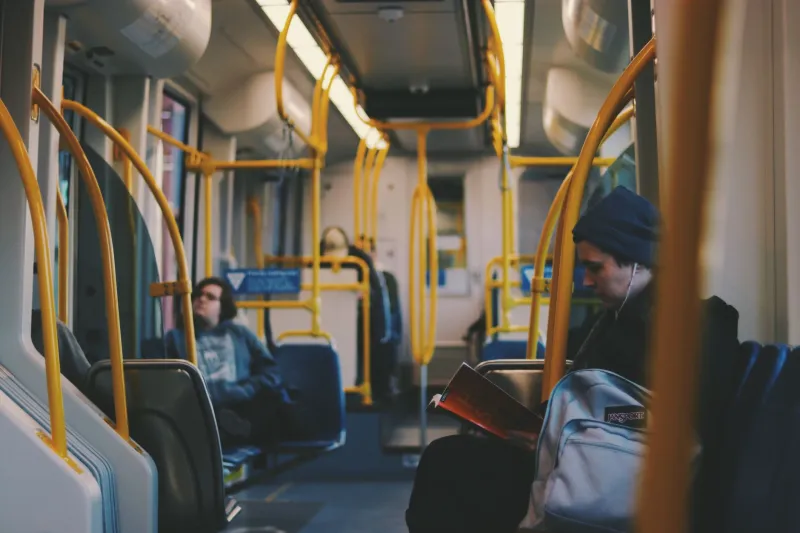
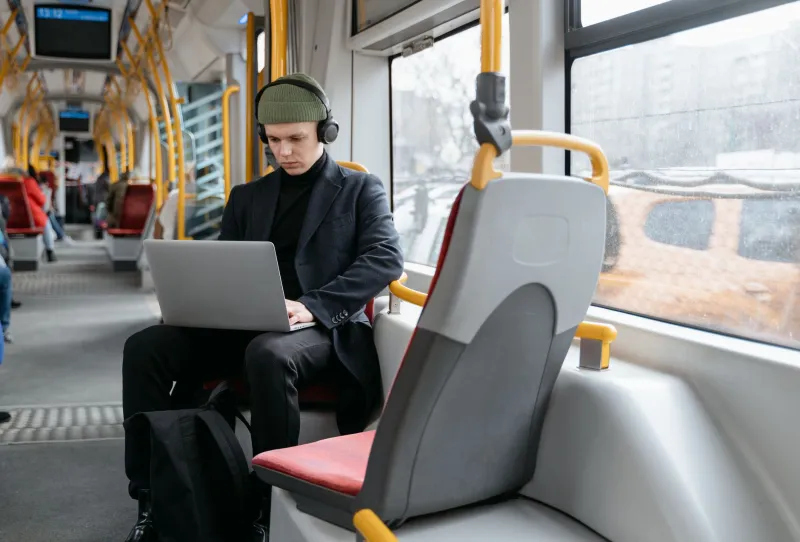
Onboard, real-time audio announcements name each upcoming stop clearly and in both Finnish and Swedish, with visual displays reinforcing the information simultaneously. The dual-channel delivery—auditory and visual—ensures that passengers with either hearing or vision impairments receive the same navigational information as everyone else.
Priority seating near vehicle entrances is clearly marked and, critically, culturally enforced. Finnish transit etiquette places genuine social weight on yielding priority seating to those who need it. Several American expats interviewed for this article noted that they had never once seen a priority seat occupied by someone who did not need it—a stark contrast to their domestic experience.
Hearing It From Those Who Have Lived Both Systems
David Okafor, a deaf educator from Chicago who relocated to Tampere with his family three years ago, describes the difference in terms of cognitive load. "In Chicago, I was always doing extra work," he explains. "Watching for visual cues the system wasn't designed to give me, asking other passengers for information, missing stops because announcements weren't displayed. Here, the system does that work for me. The visual displays are large, well-positioned, and consistently updated. I don't have to compensate."
For Okafor, the shift is not merely about convenience. It is about what accessibility communicates to the people who rely on it. "When a system is designed for you from the start, you feel like a legitimate user of public space. When it's designed around you as an afterthought, you feel like a problem that's been partially solved."
Susan Park, a low-vision traveller from Seattle who visits Tampere regularly to see family, echoes this sentiment. She points specifically to the Nysse mobile application, Tampere's official transit planning tool, which meets high-contrast and screen-reader compatibility standards as a matter of course. "I didn't have to find a workaround or use a third-party app," she notes. "The official app just worked with my phone's accessibility settings. That almost never happens back home."
The Infrastructure Behind the Experience
Tampere's accessibility achievements do not emerge from goodwill alone. They reflect deliberate investment in infrastructure, staff training, and iterative feedback from disability advocacy organizations. The city's transit authority, Nysse, maintains active consultation channels with disability groups, incorporating their input into both new projects and ongoing service improvements.
Vehicle procurement standards require that all buses and trams meet accessibility specifications that exceed the European baseline. Maintenance protocols prioritize the functionality of accessibility features—ramps, announcements, and door mechanisms—with shorter repair windows than apply to other systems. Driver training includes modules on assisting passengers with various disabilities, not as an optional supplement but as a core competency.
The results are measurable. Accessibility-related service complaints in Tampere's transit network remain consistently low compared to peer cities across Europe and significantly lower than comparable figures reported by major American transit agencies.
A Model Worth Examining Carefully
None of this is to suggest that Tampere's system is without imperfection. Older bus stops in peripheral neighbourhoods occasionally lag behind the network's modern standards, and some passengers with complex mobility needs still encounter occasional friction. But the direction of travel is clear, and the gap between Tampere's baseline and the American norm remains substantial.
For American transit planners, advocates, and policymakers, Tampere offers something more valuable than a list of features to replicate. It offers a demonstration that accessibility functions best when it is treated as a design principle rather than a compliance obligation—when the question asked at the planning stage is not "what must we provide?" but "who will use this, and what do all of them need?"
Marcia Hendricks, now preparing to return to Portland after her research position concludes, puts it plainly: "I'm going to have a harder time going back than I expected. Not because Tampere is perfect, but because I've now experienced what it feels like to be a full participant in a transit system rather than an accommodation it makes room for. That changes your expectations permanently."
For anyone who has spent years navigating a system built around the average user and adjusted reluctantly for everyone else, that shift in expectation may be the most significant thing Tampere's transit network has to offer.