No Paperwork Required: How Tampere Keeps Transit Affordable Without Making Riders Prove They're Poor
The Bureaucracy Tax on Being Poor
If you've ever tried to get a reduced-fare transit card in a major American city, you know the drill. You dig up proof of income, maybe a benefits letter, possibly a tax return. You fill out a form. You wait. You might get rejected on a technicality. And after all that effort, you've spent time and energy you probably didn't have just to save a few dollars on bus fare.
That friction isn't a bug in the American means-testing system — for a lot of transit agencies, it's quietly the point. The harder it is to claim a benefit, the fewer people claim it, and the less it costs. But here's the uncomfortable truth: that approach doesn't just save money. It also fails the exact riders those programs are supposed to help.
Tampere, Finland's third-largest city, handles this problem differently. And the results are worth paying attention to.
What Tampere Actually Does
The city's public transit fare structure is built around simplicity rather than gatekeeping. There are broadly tiered categories — adult, student, senior, child — and the discounts are substantial. A monthly pass for a student or pensioner costs significantly less than the standard adult fare, but crucially, verification is lightweight and trust-based. You're not submitting financial affidavits. You're not proving your household income falls below a threshold.
Transfers within a single journey are free, which might sound minor but has an outsized impact on lower-income riders who often live farther from city centers and need to chain multiple routes together. In American cities, each transfer can add another fare, turning a single commute into a compounding cost that eats into already tight budgets.
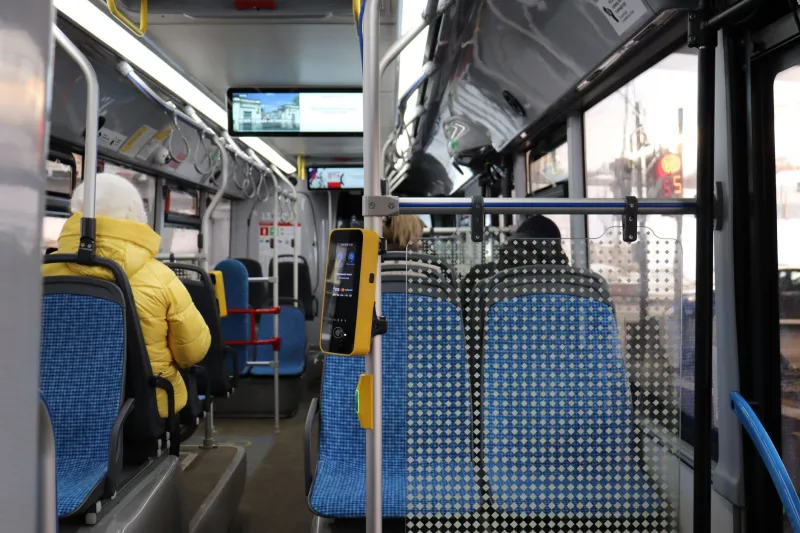
Tampere also integrates its ticketing through a digital app that allows residents to pay for exactly the travel they use — no need to front a large lump sum for a monthly pass when cash flow is tight. That flexibility alone addresses a structural problem that American transit planners rarely talk about: affordability isn't just about price, it's about timing.
The Hidden Cost of Verification
Here's something US transit agencies don't advertise: administering a means-tested discount program is expensive. Staff time, application processing, appeals, fraud prevention infrastructure — it all adds up. Some studies of American social benefit programs have found that administrative overhead consumes a significant percentage of total program costs, sometimes rivaling the value of the benefits themselves.
Tampere sidesteps most of that overhead by extending categorical discounts broadly. The assumption isn't that everyone will cheat; it's that most people are honest, and the cost of the occasional free-rider is far lower than the cost of building a verification apparatus to catch them.
This is behavioral economics in action. When you design a system assuming bad faith, you impose costs on everyone — including the majority of honest participants — to catch a small minority. When you design for good faith, you reduce friction for the many while accepting a small, manageable rate of misuse.
Why This Works in Finland (And Could Work Elsewhere)
Skeptics will immediately say: "That works in Finland because everyone there is honest and civic-minded." It's a common dismissal, and it's partially true — social trust is genuinely higher in Nordic countries, and that does make trust-based systems easier to sustain.
But that explanation lets American policymakers off the hook too easily. Social trust isn't a fixed cultural trait that cities either have or don't. It's something that systems either build or erode over time. When a transit agency treats every discount-seeker like a potential fraud, it signals distrust. That signal has a cost — not just in rider experience, but in the broader relationship between residents and public institutions.
Tampere's approach, by contrast, extends basic dignity to riders. You don't have to prove your circumstances to a bureaucrat to access a fair price. That matters in ways that don't show up in fare-recovery spreadsheets.
What Low-Income Riders Actually Need
American transit equity conversations often focus on price as the primary lever. But Tampere's model highlights a few other dimensions that matter just as much.
Predictability. Riders need to know what a trip will cost before they take it. Complicated zone-based pricing, peak surcharges, and transfer fees make budgeting nearly impossible. Tampere's flat, simple structure means there are no surprises.
Accessibility. If claiming a discount requires a smartphone, a printer, a bank account, or a specific type of ID, you've already excluded some of the riders who need help most. Tampere's system works across multiple payment channels, including options that don't require a credit card or app.
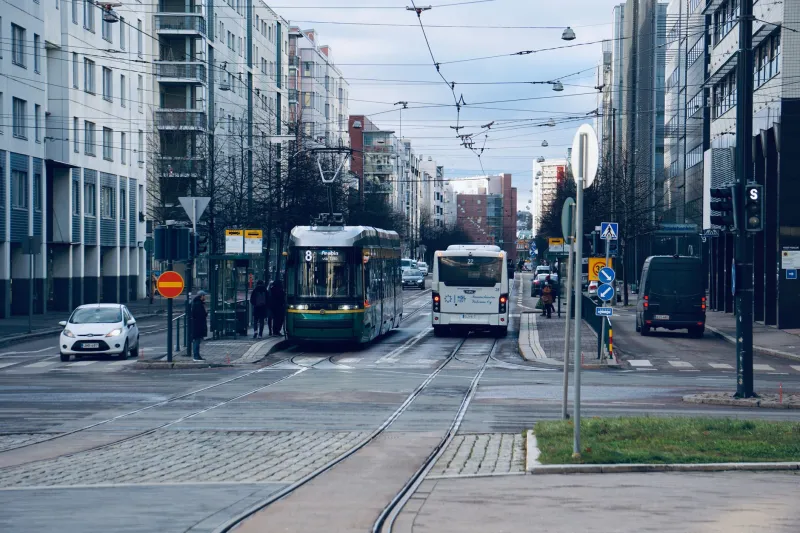
Coverage. A deeply discounted pass is useless if the bus doesn't serve your neighborhood. Tampere invests in network density — the tram and bus routes are designed to cover the city comprehensively, not just the corridors that generate the most fare revenue. Affordable pricing and broad coverage work together; one without the other doesn't solve much.
The Comparison That Should Make US Planners Uncomfortable
Consider what Los Angeles Metro went through with its low-income fare program, LIFE (Low-Income Fare is Easy). The name is aspirational — the reality involved enrollment hurdles, documentation requirements, and outreach costs that limited uptake. The program helped real people, but the bureaucratic scaffolding around it was substantial.
Or look at New York's Fair Fares program, which offers half-price MetroCards to qualifying low-income New Yorkers. Again, genuinely valuable — but enrollment requires proof of income, and the program still reaches only a fraction of eligible riders.
Tampere doesn't have a special program for low-income riders, because it doesn't need one. The base system is already structured to be affordable and flexible across income levels. There's no separate enrollment, no separate card, no separate line to stand in.
The Takeaway
None of this means Tampere has solved every transit equity problem — no city has. But the underlying philosophy is instructive. Affordability works best when it's baked into the system rather than bolted on as an afterthought. Verification overhead is a real cost that rarely gets counted. And treating riders with basic trust tends to produce better outcomes than designing systems around worst-case assumptions.
For American transit agencies watching their ridership numbers stagnate and their equity programs underperform, Tampere's approach isn't just a feel-good story. It's a working model that's been quietly running for years without collapsing under fraud or financial strain.
Sometimes the most effective solution is also the simplest one. No paperwork required.