Forget the Rental Car: How Tampere Makes Getting Around Effortless for Every Visitor
If you've ever landed in Nashville, Orlando, or even supposedly walkable cities like Denver, you know the drill. You step off the plane, drag your bags to the rental car counter, hand over a credit card, and spend the next week navigating confusing highway interchanges just to reach a restaurant that's technically three blocks from your hotel. It's expensive, stressful, and somehow just accepted as the cost of American travel.
Tampere does things differently. Visitors here routinely make it through an entire trip—sometimes a week or more—without ever needing a car. Not because they're roughing it or limiting where they go, but because the city is genuinely designed so that you don't need one. That's a harder achievement than it sounds, and it's worth understanding exactly how it happens.
The Geography Does a Lot of the Heavy Lifting
Tampere sits on a narrow strip of land between two large lakes, Näsijärvi to the north and Pyhäjärvi to the south. That geographic constraint isn't just scenic—it's actually a significant urban planning advantage. The city couldn't sprawl outward the way American cities did in the postwar era, so it stayed relatively compact. The historic center, the waterfront, major cultural attractions, and most visitor-friendly neighborhoods all sit within a manageable radius.
For context, walking from the central railway station to Tampere Cathedral takes about 15 minutes on foot. The Särkänniemi amusement park and observation tower are accessible by tram. The Vapriikki museum complex, which houses several museums under one roof, is a short walk from the city center. Visitors aren't constantly fighting against the geography the way they might be in, say, Los Angeles, where the Getty Center and Venice Beach are both considered "central" but are separated by an hour of highway traffic.
This isn't an accident. Finnish urban planning has historically prioritized density in city cores, which keeps amenities close together and makes transit investment worthwhile. When everything a visitor wants is within two or three kilometers of everything else, a good tram line and a handful of bus routes can cover almost any itinerary.
The Integrated Pass Changes the Math Entirely
Here's where Tampere really pulls ahead of most tourist destinations: the transit pass isn't just functional, it's financially logical from the moment you arrive.
A single transit card or day pass covers trams, buses, and regional connections without requiring passengers to figure out separate fare systems or carry exact change. For visitors, this removes one of the biggest psychological barriers to using public transit—the uncertainty of whether you're buying the right ticket, whether it transfers, and whether you'll get stranded somewhere inconvenient.
Compare this to a city like Miami, where a tourist trying to get from South Beach to Wynwood on public transit faces a genuinely confusing mix of bus routes, uncertain schedules, and a fare system that doesn't obviously integrate. Most visitors give up and call a rideshare, which adds up fast over a week-long trip. The rental car starts looking cheap by comparison.
In Tampere, the mental overhead is just... low. You load a card, you tap on, you go. Tourists report that after one or two rides, the system feels completely intuitive. That frictionless experience is deliberate, and it's one of the reasons visitors stop thinking about transportation and start thinking about what they actually came to see.
What American Tourist Cities Keep Getting Wrong
It's worth being honest about the structural differences here, because some of it isn't replicable without significant political will and long time horizons.
American tourist destinations—think Sedona, Arizona or the Florida Keys—often developed around the car from the very beginning. The infrastructure, the zoning, the parking requirements, the setbacks between buildings: all of it was designed for drivers. Retrofitting that into a walkable, transit-friendly environment is extraordinarily expensive and politically contentious. You can't just add a tram line to a city where every business has a surface parking lot the size of a football field.
But some American cities are closer than they think. Savannah, Georgia has a compact historic core and a free downtown shuttle. Asheville, North Carolina has a walkable arts district that visitors already tend to navigate on foot. Portland, Oregon has transit infrastructure that actually works reasonably well for tourists. The gap between these cities and somewhere like Tampere isn't always physical—it's often about pricing strategy, wayfinding, and the willingness to actively market transit as a visitor amenity rather than a fallback for people who can't afford to rent a car.
That reframing matters more than it might seem. When a city positions its transit as a feature rather than a consolation prize, it changes how visitors approach it. Tampere's tourism materials treat the tram as part of the experience, not an afterthought.
Overtourism and the Car Problem
There's a less obvious angle here worth considering. Cities struggling with overtourism—think Dubrovnik, or even domestic examples like Moab, Utah—often find that traffic congestion and parking pressure are among the most visible symptoms. Thousands of rental cars converging on a small destination create gridlock, exhaust fumes, and the general sense that the place has been overrun.
When visitors arrive by train and move around by tram, that pressure simply doesn't materialize the same way. Tampere can absorb more visitors without the infrastructure cracking because the visitors aren't each piloting a two-ton vehicle through the city center. The environmental math is better. The resident quality of life stays higher. And paradoxically, the visitor experience is often more pleasant too—nobody enjoys sitting in traffic.
American resort towns and heritage destinations are increasingly facing this exact problem, and some are starting to look at transit investment not just as a service for residents but as a visitor management tool. Zion National Park's mandatory shuttle system is an early example of this thinking. It's clunky compared to an integrated urban transit network, but it points in the right direction.
The Takeaway for Travelers
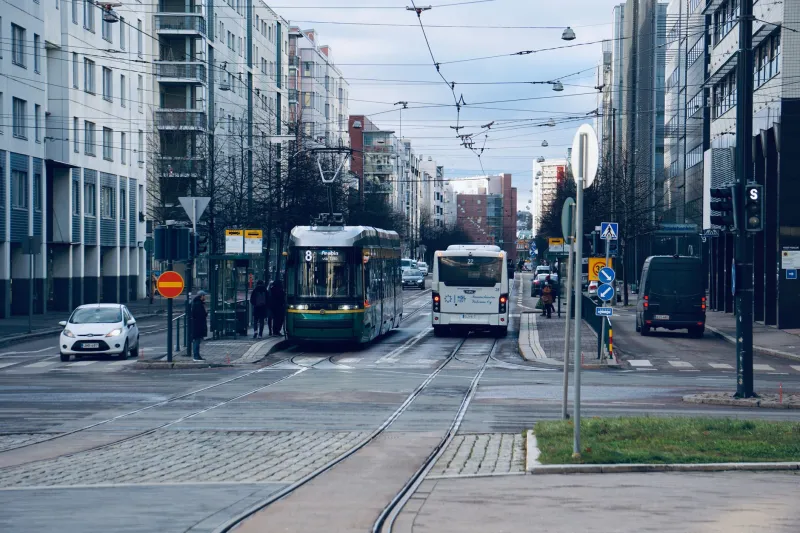
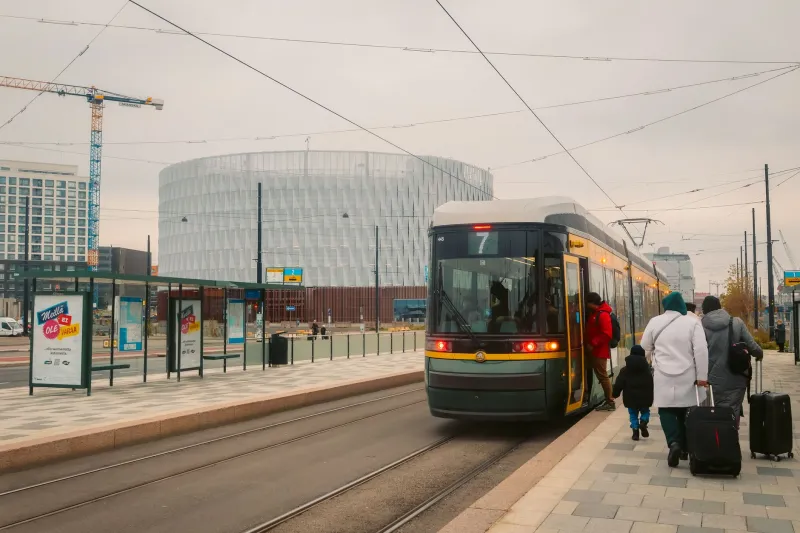
If you're planning a trip to Tampere, you can genuinely leave the rental car budget out of your spreadsheet. The tram network covers the main corridors, the buses fill in the gaps, and the walkability of the city center means your feet will handle a surprising amount of the work. Pick up a transit card at the airport or central station, download the Nysse app for real-time schedule information, and you're set.
And if you're someone who thinks about urban policy, or just finds yourself frustrated every time you land at an American airport and face the long walk to the rental car shuttle—Tampere is a useful reminder that it doesn't have to be this way. The car-optional tourist experience isn't a fantasy. It's just a set of decisions that some cities have made and others haven't gotten around to yet.