Finnish Winters Don't Cancel Buses: Inside Tampere's Obsession With Showing Up On Time
The Bus That Doesn't Make Excuses
Anyone who's waited for a city bus in Chicago, Boston, or Seattle during a snowstorm knows the drill. The app says the bus is four minutes away. Then eight. Then the listing disappears entirely, replaced by a cheerful notification that service is experiencing delays due to weather conditions. You're left standing on a corner, wondering whether to just call a rideshare.
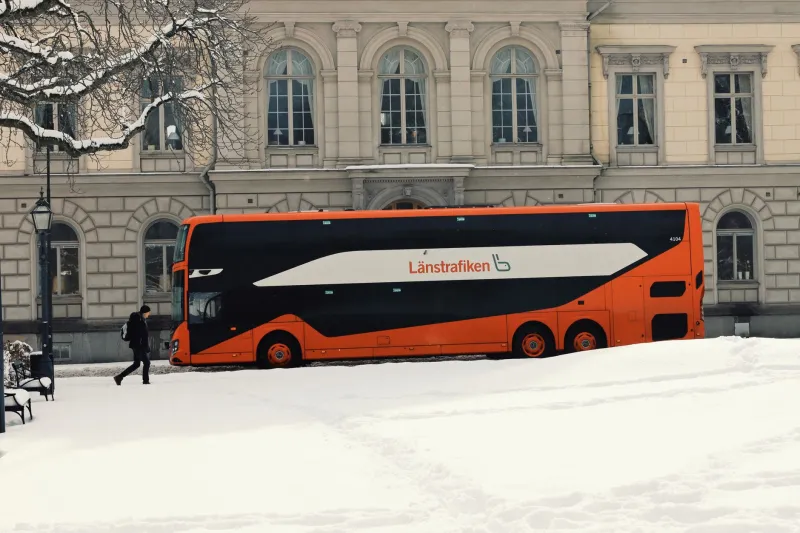
Now picture Tampere in January. It's minus fifteen Celsius—that's about five degrees Fahrenheit—and the snow is coming down sideways. The bus arrives within ninety seconds of its scheduled time. This isn't a lucky day. It's a Tuesday.
Tampere Transit, operated under the Nysse regional transit network, consistently posts punctuality rates north of 95%. That number holds up in summer and winter alike. So what exactly is going on over there, and why can't American cities seem to crack the same code?
It Starts Before the Bus Ever Leaves the Garage
One of the least glamorous but most important factors in Tampere's on-time performance is maintenance scheduling. Buses in the Nysse fleet undergo regular preventive maintenance rather than the reactive approach—fix it when it breaks—that plagues many underfunded US transit agencies.
This sounds obvious, but it has enormous downstream effects. A bus that breaks down mid-route doesn't just delay the passengers on board. It creates a cascade: the next bus on that line gets crowded, drivers fall behind schedule trying to accommodate the overflow, and the ripple spreads across the network. Tampere's approach essentially treats mechanical failure as a scheduling problem, not just a maintenance problem.
The city also pre-treats roads and transit corridors before major weather events rather than waiting to respond after conditions deteriorate. Salt trucks and sand spreaders work through the night ahead of predicted snowfall, keeping key bus routes functional during morning rush hours. American cities do this too, of course—but Tampere's transit authority coordinates directly with road maintenance crews in a way that keeps bus routes prioritized, not an afterthought.
Real-Time Data That Actually Works
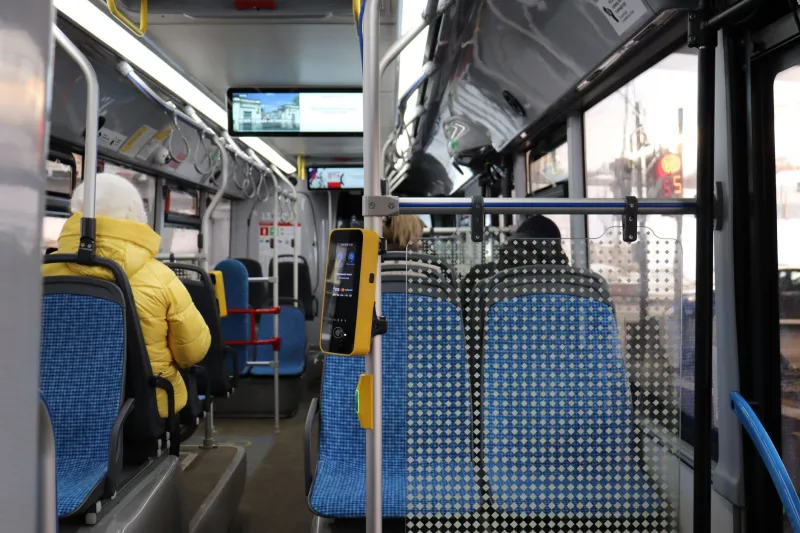
Tampere's transit vehicles are equipped with GPS tracking that feeds into a centralized operations system in real time. Dispatchers can see the entire network at a glance and identify developing delays before they compound. When a bus starts running two minutes behind schedule, operators can make micro-adjustments—holding a connection slightly, rerouting a following vehicle, or dispatching a reserve bus—before the problem becomes a passenger complaint.
The public-facing version of this system is the Nysse app, which gives riders accurate, live arrival times rather than the schedule-based estimates that many American transit apps still rely on. There's a meaningful difference between an app that tells you a bus is scheduled to arrive at 8:14 and one that tells you it's currently 400 meters away. The latter actually changes behavior: riders plan better, wait less, and trust the system more.
That trust, it turns out, is operationally significant. When riders trust the schedule, they show up at stops on time. Buses don't have to wait for late arrivals, which keeps vehicles on schedule. It's a feedback loop that works in Tampere's favor—and one that's nearly impossible to build in systems where reliability is already broken.
Dedicated Lanes and the Physics of Punctuality
Here's a blunt truth about why buses run late in most American cities: they're stuck in the same traffic as everyone else. When a three-car pileup backs up traffic on a major corridor, the bus sits there too. This is not a transit problem. It's a road design problem.
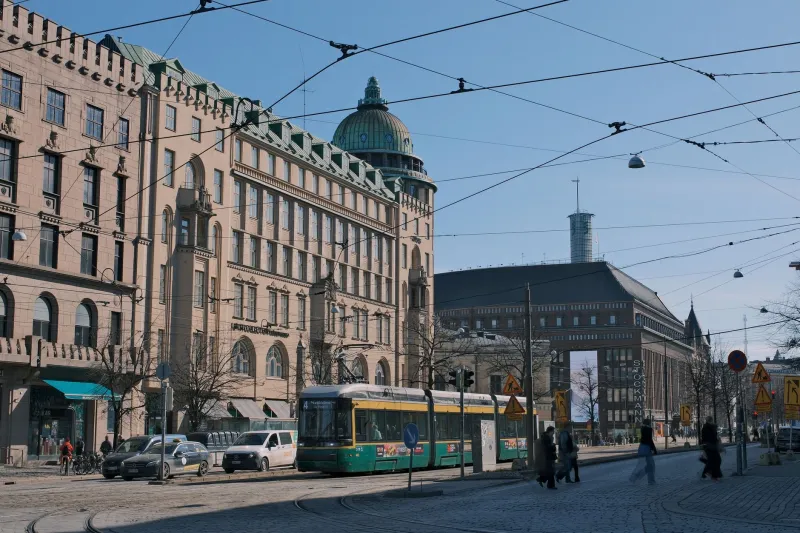
Tampere has invested heavily in dedicated bus lanes and signal priority systems. These aren't just painted lines on the road—they're enforced lanes with traffic signals programmed to extend green lights for approaching transit vehicles. The tram network, which shares infrastructure with buses at certain points, benefits from the same priority logic.
The result is that transit vehicles in Tampere are largely insulated from the traffic variability that destroys schedules in cities like Los Angeles or Atlanta. A bus that doesn't get stuck in traffic doesn't need extra buffer time built into its schedule, which means the schedule can be tighter and more accurate.
Some American cities are experimenting with bus rapid transit lanes and signal priority—Chicago's Ashland Avenue BRT proposal has been debated for years, and a handful of cities have implemented limited signal priority corridors. But the political will to actually remove a lane of car traffic and hand it to buses is still rare. In Tampere, that decision was made and defended.
The Cultural Layer (And Why It's Not an Excuse)
Fair disclosure: some of what makes Tampere's transit work is genuinely cultural and not easily exported. Finnish cities have a long tradition of expecting public services to function correctly, and there's relatively low tolerance—from riders and politicians alike—for chronic underperformance. Transit agencies face real accountability when numbers slip.
There's also the matter of funding. Finnish transit is subsidized at levels that most American municipalities would struggle to match, and labor relations tend to be more stable, which reduces service disruptions from strikes or high driver turnover.
But here's the thing: using culture and funding as the only explanation lets American transit agencies off the hook too easily. Preventive maintenance schedules cost less than emergency repairs. Real-time tracking systems are increasingly affordable. Dedicated bus lanes require political courage, not new technology. Signal priority systems can be retrofitted without rebuilding entire intersections.
None of these solutions require Tampere-level subsidies to implement. They require prioritization—of funding, of road space, of operational discipline.
What a US Agency Could Actually Do Tomorrow
If you're a transit planner reading this from somewhere in the US, the honest takeaway isn't "move to Finland." It's a shorter list than you might expect.
Start with data transparency. Publish real on-time performance numbers by route, publicly and regularly. Accountability follows visibility. Then look at your maintenance backlog—deferred maintenance is a slow-motion reliability crisis that compounds every year it's ignored.
Push for even one dedicated bus lane on your highest-ridership corridor. Measure the results. Let the data make the argument for the next one.
And if your real-time tracking app is still serving schedule-based estimates dressed up as live data, fix it. Riders notice, and what they notice shapes whether they trust the system at all.
Tampere didn't build a 95% punctuality rate overnight. It built operational habits and infrastructure investments over years, and it defended them even when they were inconvenient. That part, at least, doesn't require a Finnish passport.