Why American Cities Shut Down at Midnight While Tampere Keeps Rolling
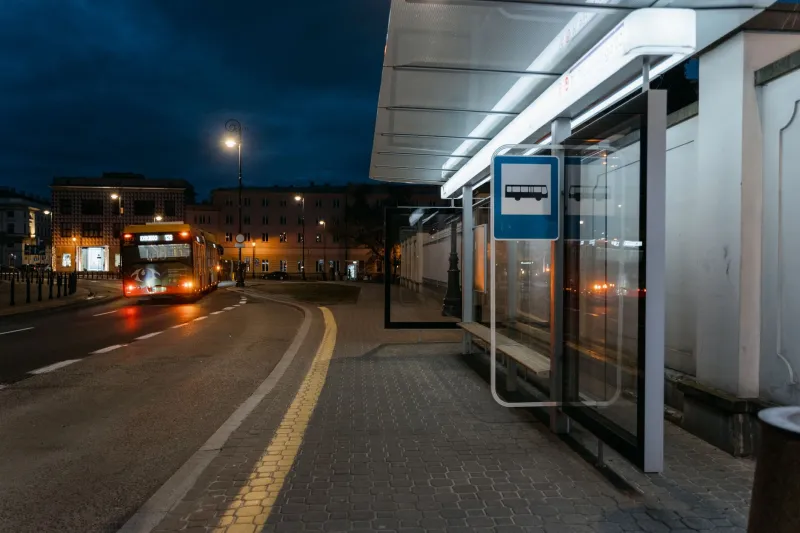
Ask a transit planner in Chicago or Houston why their city doesn't run more buses after midnight, and you'll get a familiar answer: too expensive, too few riders, too complicated. Then ask someone in Tampere the same question, and they'll probably just shrug. Night service isn't a special program here. It's just Tuesday.
For American visitors arriving in Tampere expecting the same transit desert they'd find back home after 11 PM, the experience can feel almost disorienting. Buses still show up. The tram runs. The app works. Nobody's scrambling for an Uber at 1 AM because the last train already left. It's not magic — but understanding how Tampere pulls it off does require rethinking some deeply held assumptions about what public transit is actually for.
The 9 PM Cliff
If you've ever tried to get home from a late dinner or a concert using public transit in a mid-sized American city, you already know what the 9 PM cliff feels like. Service frequencies drop. Routes get cut. Suddenly the bus that ran every 12 minutes during rush hour shows up once an hour — if at all. By midnight, you're stranded.
This isn't an accident. It reflects a core belief baked into how US transit agencies are funded and evaluated: ridership during peak commute hours justifies the system, and everything else is a bonus. Night service, in this framework, is charity. It costs money, attracts fewer riders per trip, and rarely shows up in the performance metrics that determine budget allocations.
Tampere operates from a different premise entirely. Transit isn't measured purely by whether each individual trip turns a profit. It's evaluated by what the network enables — who can get to work, who can participate in the city's economy, who can live without a car. When you run the math that way, keeping buses on the road at 2 AM starts looking less like a luxury and more like basic infrastructure.
Who Actually Rides at Night
Here's the part that gets glossed over in US transit debates: the people who need late-night buses the most are often the people with the least political power to demand them.
Night-shift workers — hospital staff, warehouse employees, restaurant workers, cleaners, security guards — don't have the option of commuting at 8 AM. Their jobs exist precisely because someone has to be there when everyone else isn't. In American cities, these workers are routinely expected to own cars or pay surge-priced rideshares, essentially absorbing a hidden cost that subsidizes the businesses employing them.
Tampere's approach recognizes night-shift workers as a legitimate transit constituency, not an afterthought. Routes are designed with hospital campuses, industrial zones, and service industry hubs in mind — not just the downtown office corridors that dominate daytime planning. The result is a system that actually reflects how the city functions around the clock, rather than just how it functions between 7 and 6.
The Scheduling Puzzle (And Why It's Not Actually That Hard)
One argument US agencies frequently make against extended night service is operational complexity. You need drivers willing to work overnight shifts. You need maintenance windows. You need to balance labor costs against thin ridership numbers at 3 AM.
These are real considerations — but Tampere's experience suggests they're more manageable than American transit agencies tend to admit. A few factors help:
Driver compensation and scheduling flexibility. Tampere's transit workers are well-compensated and part of a labor structure that treats night shifts as a normal part of the rotation rather than a hardship assignment. When night work is factored into standard contracts rather than bolted on as an exception, it becomes far easier to staff.
Demand-responsive calibration. Not every route runs at full frequency at 3 AM — that would be wasteful. But the network doesn't simply vanish. Core corridors maintain service, and the frequency adjusts based on actual ridership patterns. It's not all-or-nothing thinking.
Integration with the broader mobility ecosystem. Night transit in Tampere isn't trying to replicate the entire daytime network. It's designed to fill the gaps that matter most — connecting people to essential destinations, bridging the hours between last service and first service, and making sure no neighborhood becomes completely inaccessible after dark.
The Social Math US Cities Keep Getting Wrong
Here's a comparison worth sitting with. When an American city cuts late-night bus service to save money, it doesn't make the transportation need disappear. It shifts the cost — onto individual workers who now need cars they can't afford, onto employers who struggle to retain night-shift staff, onto emergency services that respond to accidents caused by exhausted workers driving home at dawn.
Tampere's transit planners think about these externalities. The city isn't just asking whether a 1 AM bus route covers its own operating costs. It's asking what happens to the city if that route doesn't exist.
That's a different question, and it leads to different answers.
What Visiting Americans Notice First
Talk to Americans who've spent time in Tampere, and a recurring theme comes up: the freedom. Not the abstract freedom of transit policy papers, but the practical, daily freedom of not having to plan your evening around when the last bus leaves.
You can stay for one more drink. You can catch the late showing. You can work an extra hour without panicking about getting stranded. These small freedoms compound into something larger — a city that feels genuinely livable at all hours, not just during the window when transit agencies find it convenient to operate.
US cities often talk about transit as a tool for equity, sustainability, and economic development. Those goals are real. But they require a system that's actually present when people need it — not one that clocks out at 9 PM and calls it a day.
The Takeaway for American Transit Advocates
Tampere isn't a megalopolis. It doesn't have the population density of New York or the sprawl budget of Los Angeles. What it has is a transit philosophy that treats night service as a core function rather than a fringe benefit.
For Americans pushing for better transit in their own cities, that distinction matters. The argument against night service is almost always framed as a resource problem. Tampere's experience suggests it's actually a priority problem. The resources follow the priorities — and right now, too many US cities have decided that the people who work while everyone else sleeps don't quite make the cut.
That's a choice. And it's one that doesn't have to be permanent.